
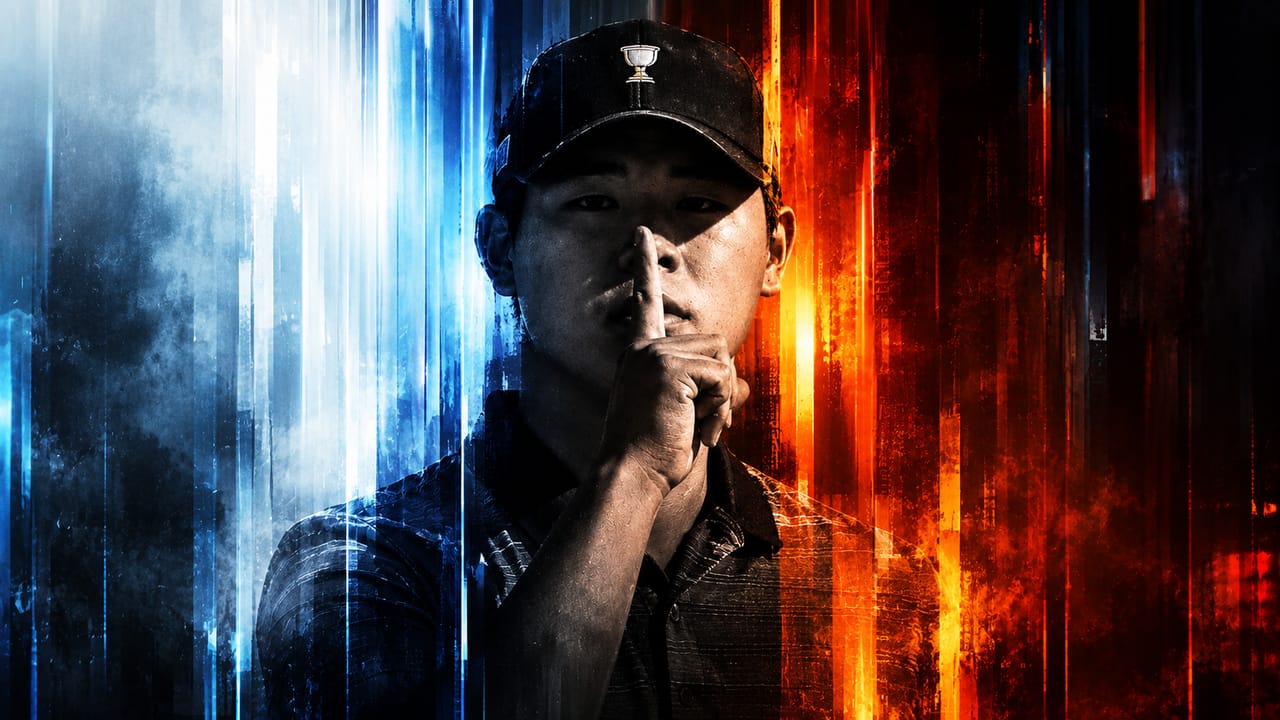
Going Into Battle with Si Woo Kim
The story of one of the best golfers in the world is largely untold. So I played Call of Duty with him to find out more.
It’s Tuesday night. Si Woo Kim and I are about to jump out of a plane.
I’ve wanted to interview Si Woo for years. Despite an incredible résumé, very little is known about the 31-year-old South Korean, currently the 13th-ranked player in the world.
For much of his career, a language barrier made media requests a challenge. But his English has improved in recent years. He’s comfortable talking now.
I didn’t want to do a conventional interview, the kind of Zoom call where you ask boilerplate questions and get boilerplate answers. I wanted to get inside the mind of one of the greatest golfers on the planet, the youngest Players Championship winner in PGA Tour history.
So I threw out an idea I thought Si Woo might enjoy: what if I interviewed him while we played Call of Duty?
I’d heard that Kim is an avid gamer, even bringing his console with him on the road. What better way to get to know one of the best players in the world than to partner up with him, especially on the precipice of his fourth Presidents Cup appearance?
Si Woo loved the idea.
If you follow professional golf closely, there are a few things about Si Woo you may already know.
You might be familiar with his prodigious caffeine intake, though he tells me he’s cut it down to just two coffees and two energy drinks per day.
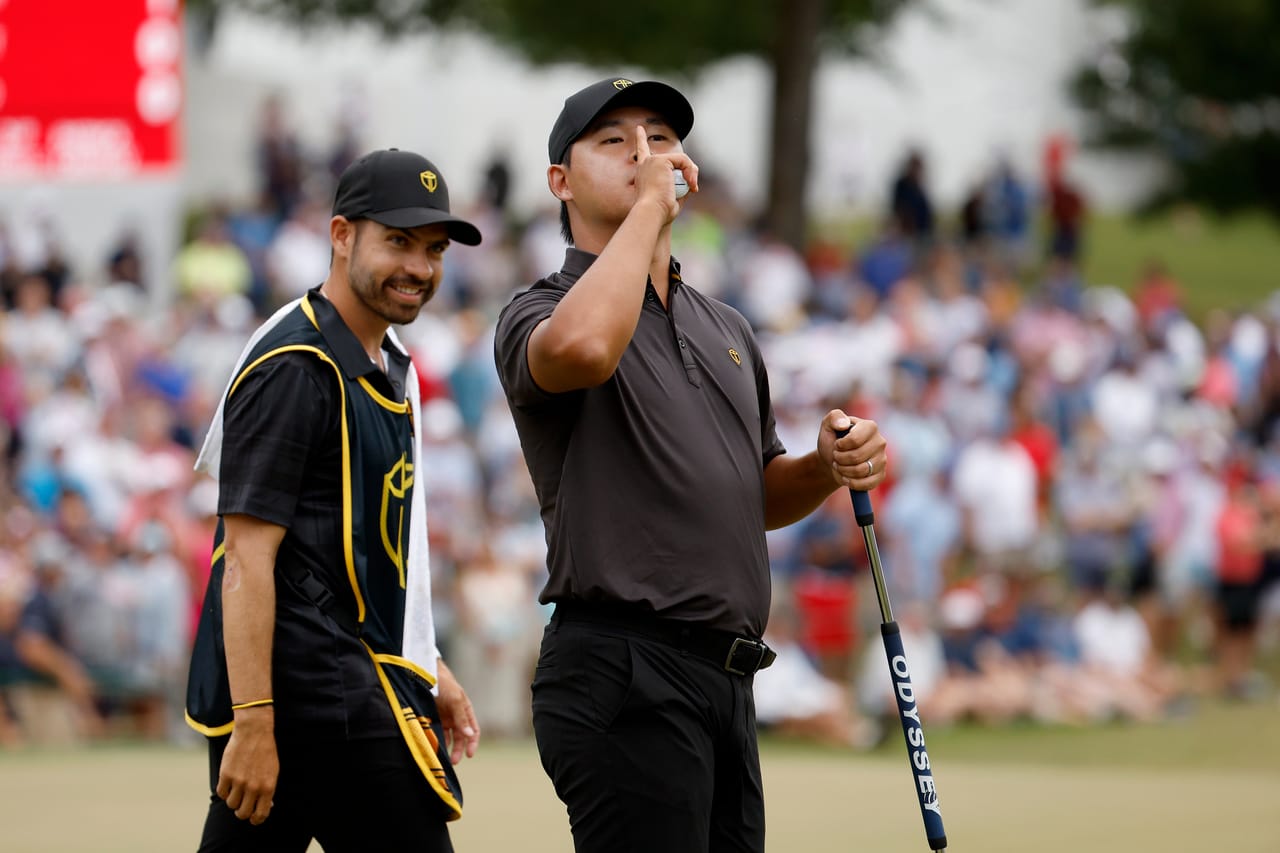
You may know that he’s one of the funniest and most popular personalities on the PGA Tour.
Ask anyone on or around the Tour what they think of Kim and their face immediately lights up.
“He’s one of the nicest guys you’ll ever be around,” his current instructor Chris Como tells me over a phone call. “He’s just so sweet to the people around him and just a very genuinely good-hearted person.”
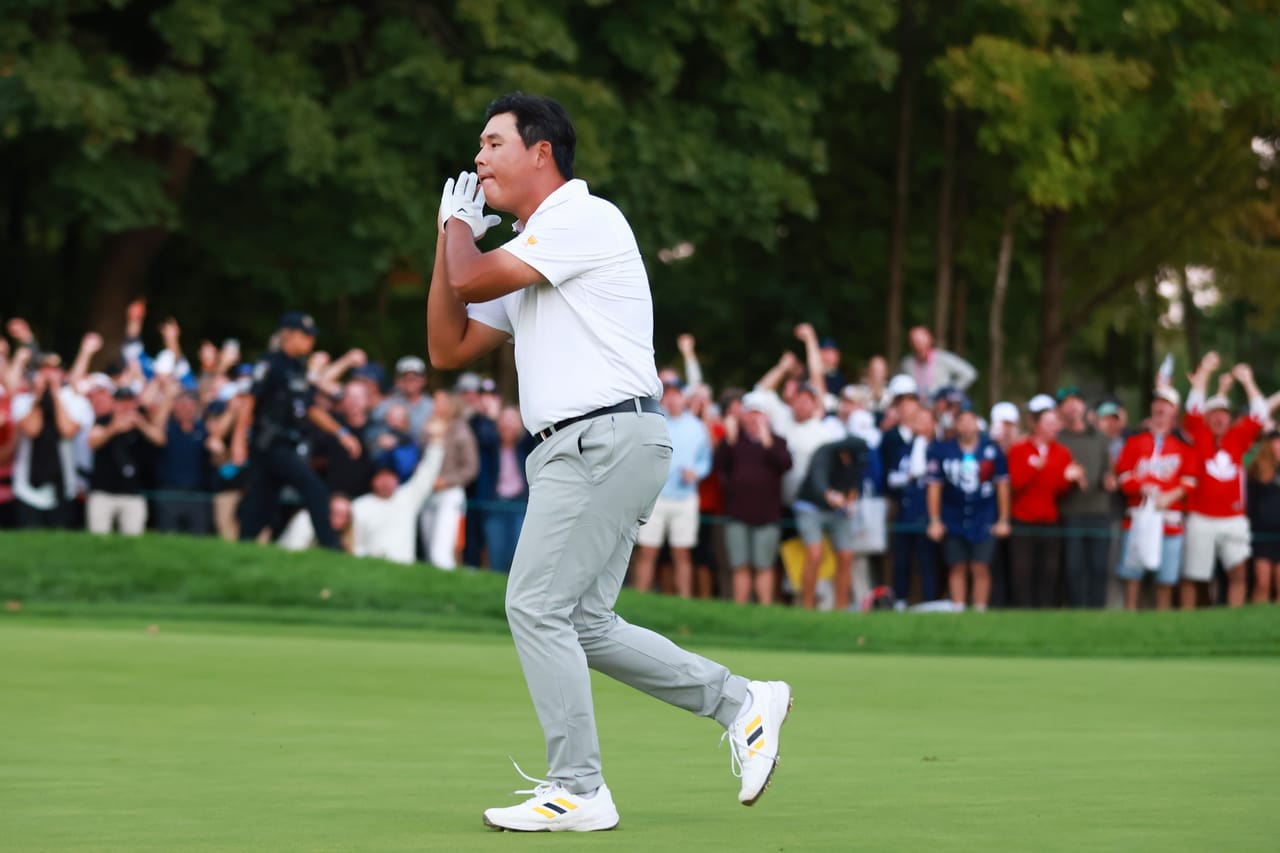
And you may know that Si Woo is one of the most aggressive players on the PGA Tour. He’s never been afraid to hit driver off the deck. He’s never seen a flagstick he didn’t want to attack.
“He just plays literally with less fear than probably anyone I’ve ever seen on a golf course,” his former instructor Sean Foley says, laughing. “He would hit driver off the deck to an island green with a right pin and a left-to-right wind. He was wild. But fantastic. You won’t find anyone on Tour who does not like Si Woo Kim, and that is not normal on the PGA Tour.”
You won’t find anyone on Tour who does not like Si Woo Kim, and that is not normal on the PGA Tour.
But I wanted to know what was beneath the surface.
I wanted to know if he is as aggressive and fearless on the battlefield as he is on the golf course. I wanted to hear about the journey of a child prodigy who came to America at age 17 without speaking any English, turned professional, and went on to become a four-time PGA Tour winner and one of the best golfers in the world.
Two days after the Tour Championship, it’s time to find out.
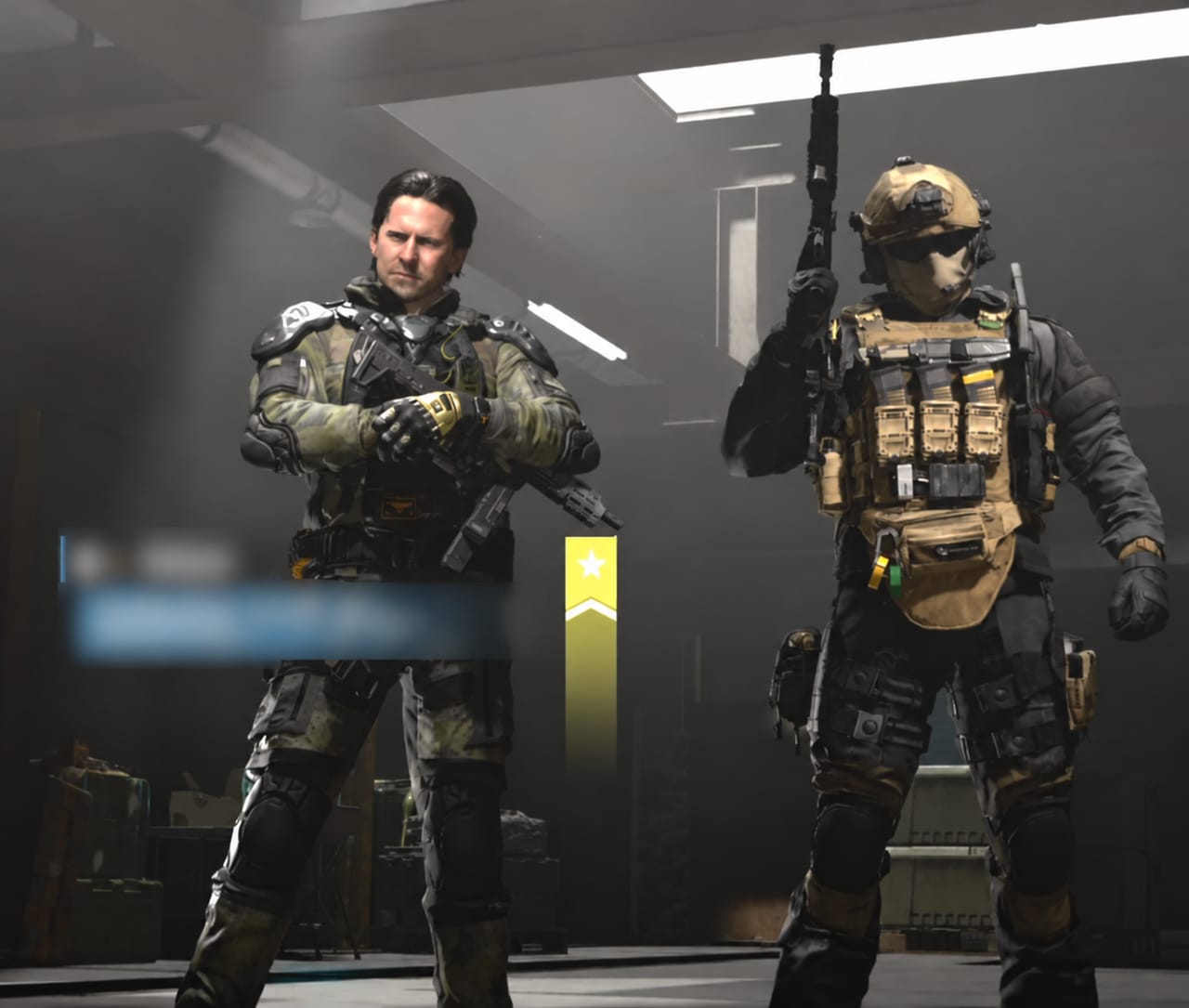
Our avatars are standing side by side in the Call of Duty pregame lobby. Si Woo’s character is decked out in top-shelf equipment, the kind of apparel you can only unlock with time and success. My character is dressed in the game’s default clothing, a dead giveaway that I am a novice. I’ve been training for a week, hoping to become competent enough that playing with me isn’t a miserable experience for Si Woo — and that we might have a fighting chance of winning a game.
“How I feel right now is probably how you feel on the first tee of a major,” I joke.
“I’m kind of scared too,” he replies.
We jump from the plane, cut our parachutes, and go looking for blood.
An Unlikely Victory
“Does it feel like it’s been almost 10 years since you won the Players Championship?” I ask him.
We’re looting a mansion, scavenging for ammo and armor. I’m mostly following him around, already concerned that I am dragging him down.
“I feel like it was only like a couple years ago,” he responds through the headset. “It’s crazy. I’m getting old.”
Nobody expected Si Woo Kim to win the 2017 Players Championship, himself included.
He was only 21 years old, in his second year on Tour. But getting there had already been an adventure.
Up to that point, the only coach Si Woo had ever worked with was his father, Du-young, a proficient player who Si Woo describes as a “two or three handicap.” Si Woo can still remember following his dad around the golf course as a kid and hitting a ball for the first time. Soon he was begging his dad to take him to the driving range every day.
Si Woo, under the instruction of his father, had immediate success.
Beginning in the third grade, Si Woo won the Maruman Cup, a national tournament for Korean elementary-school golfers, four consecutive years, a feat no junior golfer had ever accomplished. By his third year of middle school, he became the youngest player ever selected to South Korea’s national team.
Word spread quickly throughout Korea. He was a child prodigy.
At 17 and a half years old, Si Woo became the youngest player in PGA Tour history to make it through all four stages of Q-School. There was only one problem: He was too young to actually become a PGA Tour member.
Si Woo wasn’t even aware of the Tour’s age requirement when he entered Q-School. The rule cost him six months while his peers accrued points. He made six PGA Tour starts after turning 18 on June 28, 2013, and missed the cut in all six. He was relegated to the Web.com Tour.
His first year there was a struggle. Kim made four cuts in 19 starts and earned $45,883.
“The first few months, I wanted to go back to Korea because I was struggling with English and I felt like people didn’t respect me because I did not speak English well,” he says. “I was always sad and frustrated. And I was playing badly at the time, so it was tricky.”
I felt like people didn’t respect me because I did not speak English well.
He was traveling with his parents, neither of whom spoke English. The golf was challenging enough. Traveling with a language barrier didn’t make life any less stressful.
“Gate changes were the worst,” Kim says.
“I would be sitting the whole time at Gate A16 or whatever. Then the gate would change and I couldn’t catch the English. So every time I missed the flight. That happened six or seven times a year.”
Off the course, he was still finding his way. On it, he began to find his footing.
He won the 2015 Stonebrae Classic, becoming the second-youngest winner in Web.com Tour history and helping secure his promotion back to the PGA Tour. Then, he capped off a solid rookie PGA Tour season with a win at the 2016 Wyndham Championship, lapping the field by five shots.
Five months later, Sean Foley was sitting at a bar with a friend at Torrey Pines when he received a phone call from Mark Carens, Si Woo’s caddie at the time.
It was Tuesday evening of tournament week. Si Woo’s swing was in total disarray. Carens wanted to know if Foley could take a look.
Intrigued, Foley headed out to the range, unprepared for the mess he was about to walk into.
It was bleak.
Foley asked Si Woo to hit a few drivers. Balls began sailing wildly to the right, onto North Torrey Pines Road, which runs along the east border of the range. The road is hittable, but only if you’re aiming for it.
Or if your swing is in complete shambles.
Foley told him to put the driver away before they killed a pedestrian.
Two days later, Kim hit just one fairway in the opening round of the Farmers Insurance Open. He shot the highest score of the day, an 11-over-par 83, then withdrew.
Looking back, Kim says that while the yips may have felt mental, the underlying issue was technical.
After winning the Wyndham, Foley explained, Si Woo made changes to his swing in an effort to make his backswing look more like Adam Scott’s, a player he had long admired. In the process, the clubface had become significantly more open at the top. Combined with Si Woo’s extremely weak grip, the result was a clubface that remained open through impact and sent shots miles offline to the right.
He had developed a severe case of one of golf’s most harrowing afflictions: the driver yips.
For the first time, Si Woo was dealing with a swing issue he and his father could not resolve. He wanted another set of eyes.
Slowly, Foley and Si Woo began piecing his swing back together. His scores remained dismal, but his ball-striking was steadily improving.
Si Woo missed four consecutive cuts after Torrey Pines. Then he finished 15-over par at the World Golf Championship in Mexico, shot 81 at the Valspar before withdrawing with a lingering back injury, scraped together a T-49 at Bay Hill, withdrew from the Shell Houston Open, and shot 81 in the second round of his Masters debut to miss the cut by six. A T-22 at the Valero Texas Open was his only sliver of hope entering one of the most demanding weeks of the year.
The Players Championship had arrived.
If there is a golf course you don’t want to step onto while dealing with the driver yips, TPC Sawgrass is near the top of the list. There is water. There are trees. There is wind.
His recent ball-striking improvements were about to be put to the test.
Si Woo opened with a three-under-par 69, sitting in a tie for seventh despite an awful day on the greens. In round two, he produced another clinical ball-striking performance while somehow putting even worse. He slipped into a tie for 16th.
A brilliant Saturday 68 — a round that included a trademark Si Woo Kim driver off the deck on No. 14 — catapulted him into fourth place, only two shots behind the leaders.
He played the front nine in 33 (3 under) on Sunday to overtake the lead. By late afternoon, Si Woo was walking to the 18th tee two shots clear of the field.
Five months earlier, he couldn’t find the ocean from a dock. Now he was staring at one of the most intimidating tee shots in golf, water lining the entire left side.
If the demons that had plagued him throughout the season were going to show up, now would be the time.
Not today.
Si Woo roped a 3-wood down the left side of the fairway, effectively sealing the tournament.
He made a stress-free par to complete the only bogey-free round in the field on Sunday and win by three shots.
“I never thought I was going to win like The Players and these kinds of events, the top events, because these guys are too good,” Kim says. “I was just happy to be there. My goal was just to make the cut. I played a decent round every day, and in the final round I was leading. It was crazy.”
The win was a seminal moment in his career. Si Woo had beaten the strongest field in golf to capture what is often called the sport’s fifth major. It gave him a five-year PGA Tour exemption and a $1.89 million winner’s check, which he used to buy his first home in Dallas.
He was highly accomplished and just 21 years old.
And somehow, he still wasn’t convinced he could beat the best players in the world.

When you die in Call of Duty, at least in the game mode we’re playing, you spend the next 15 to 45 seconds spectating your playing partner. The camera switches to their perspective.
Whenever Si Woo dies, this means he’s subjected to watching me before he gets redeployed back into the game. It’s humiliating, making him witness this. I just try to focus on staying alive.
Thankfully, Kim is an encouraging gallery. He tells me I’m already better at the game than he is.
He is being nice. I am not better than he is, nor remotely close.
“I just hide,” I tell him.
“Yes, that’s a skill,” he replies.
When I die, I get to watch Si Woo. I see what he sees. I hear what he hears. Sometimes the best way to learn is by observing someone who has mastered their craft.
Befriending Scottie
“I don’t think it’s a coincidence that he’s been playing with Scottie and is playing the best golf of his career,” Michael Kim, a fellow PGA Tour player and close friend of Si Woo’s, tells me.
Si Woo agrees.
The story of Si Woo and Scottie Scheffler’s friendship dates to 2024. Si Woo didn’t have many friends in Dallas. He often played and practiced alone. He didn’t know Scheffler well, but one day at Kapalua he approached him in the locker room.
Si Woo wanted to upgrade his practice facilities from TPC Craig Ranch. He was curious where the best player in the world practiced.
“I’m at Royal Oaks,” Scheffler said.
“Can I join there?” Kim asked.
Scottie vowed to put in a good word.
A couple months later, Si Woo was in. The next time they both had a week off, Scheffler reached out and asked if he wanted to play. Si Woo was ecstatic.
An occasional game during off-weeks soon turned into a regular one. Kim and Scheffler started playing together multiple times per week. Unfortunately for Si Woo — and his wallet — the results have been rather one-sided. Beating Scheffler remains an elusive goal.
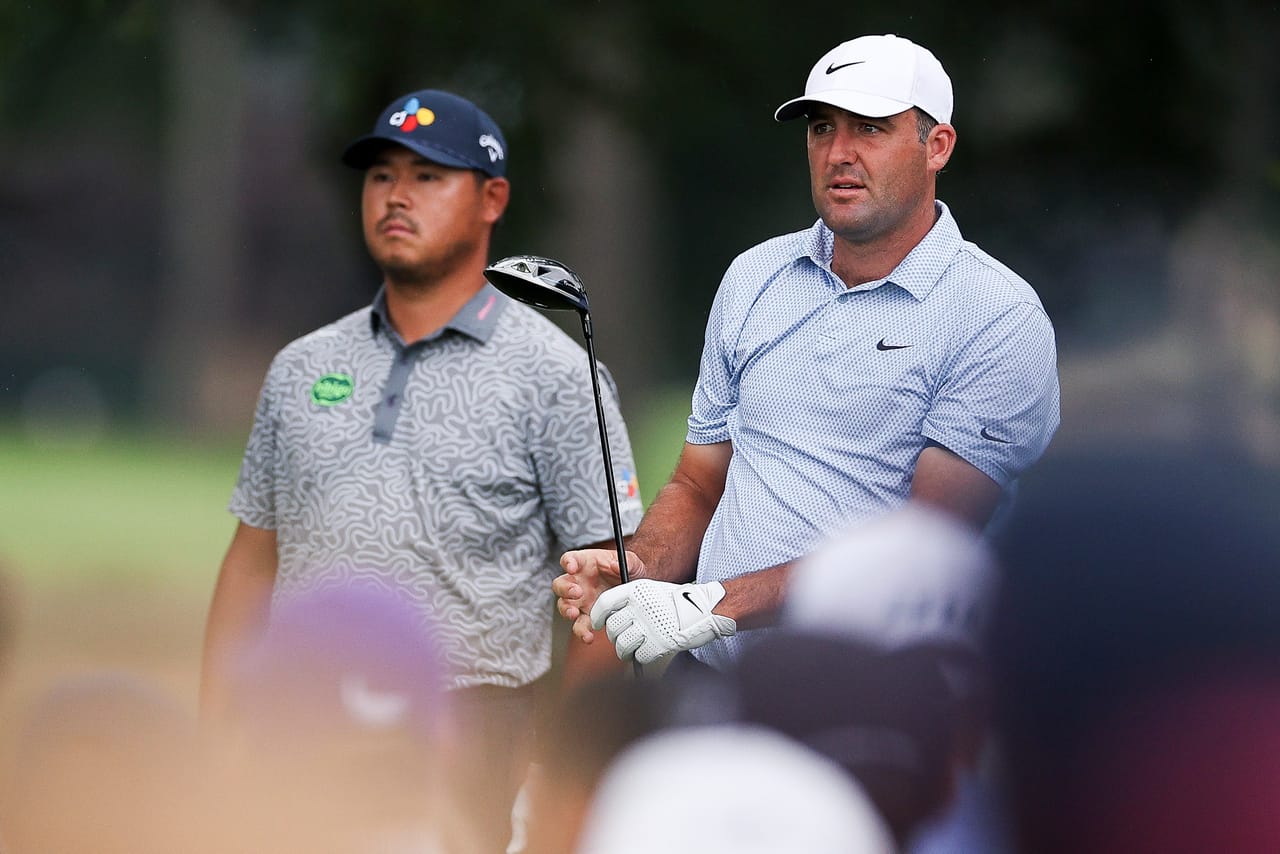
“Sometimes I’m like, ‘Why is he even playing with me?’” Si Woo says.
In one of their matches earlier this year, Scheffler made bogey on the opening hole.
“I thought maybe this is the day I can beat him,” Si Woo says.
He starts laughing as he delivers the punchline.
“He shot 59.”
I thought maybe this is the day I can beat him. He shot 59.
Nonetheless, Si Woo keeps coming back for more.
“He’s not afraid to just keep going back to Scottie and getting beaten again,” Michael Kim says. “That’s the mentality you need to have to be a great golfer, to not let a few bucks and a few losses get in the way of trying to compete and get better.”
These days, when the two play together, Si Woo peppers Scheffler with questions. He can’t recall the world No. 1 ever declining to answer one. Many are about course management, one of Scheffler’s greatest strengths and, throughout Si Woo’s career, one of his biggest weaknesses.
“My strategy before was just go for the pin and every time I wanted to make birdie no matter what,” Si Woo says. “I didn’t really have much strategy. But since I joined Royal Oaks, I ask him so many questions when we are playing together. I have learned a lot about strategy from him and am trying to catch up with that.”
I ask for specifics.
He tells me that he’s learned the value of shaping the ball in both directions. He noticed Scheffler curving shots from right to left toward left-side hole locations and asked him about it.
“What I learned basically is to pretty much aim at the center of the green and then shape the ball towards the flag,” he says. “And if you don’t shape it, still aim at the center of the green.
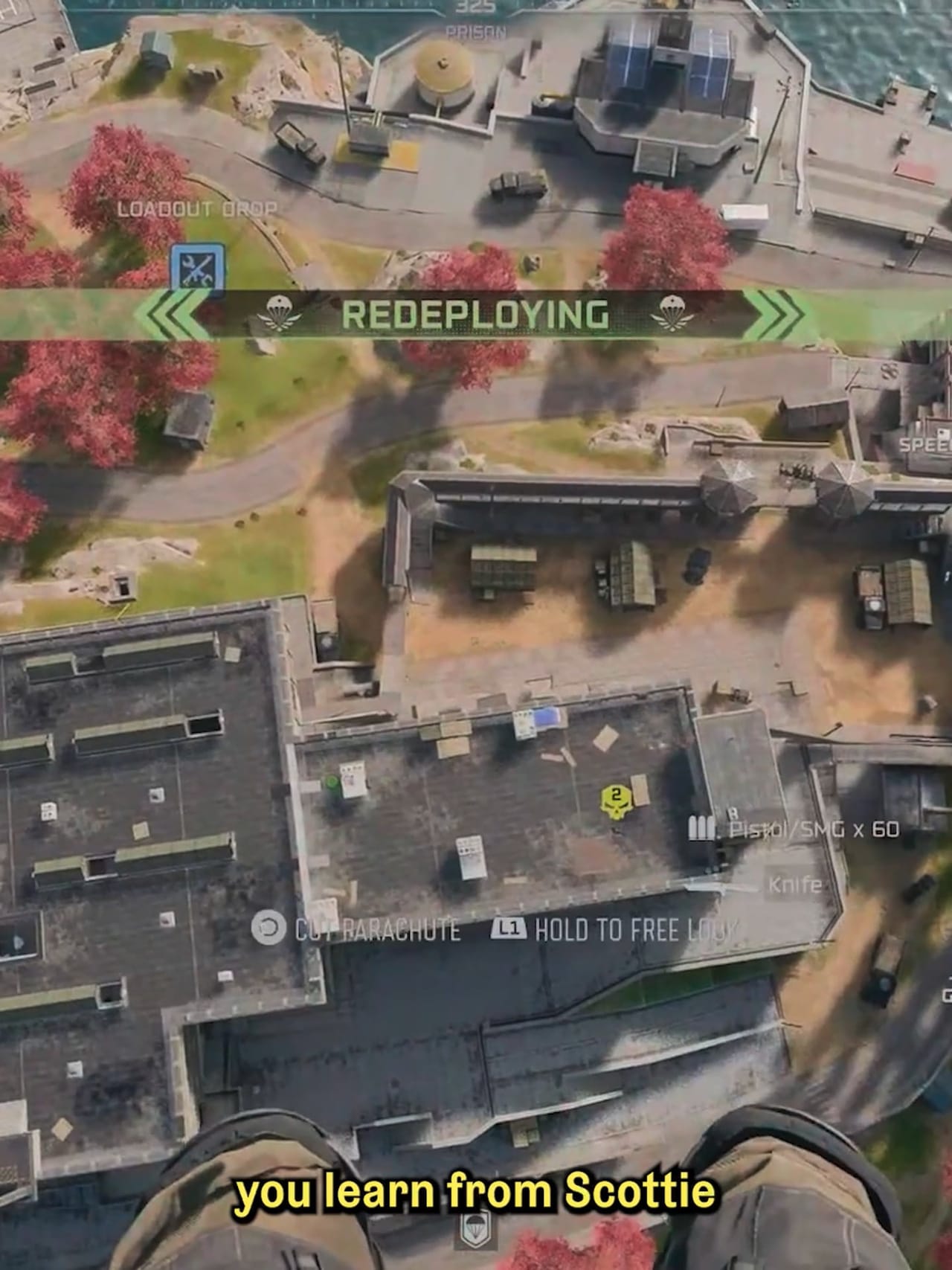
“That has helped me a lot. Even if I make a mistake, I’m still in play. Before, like if I missed one shot, it would cost me a double or triple.”
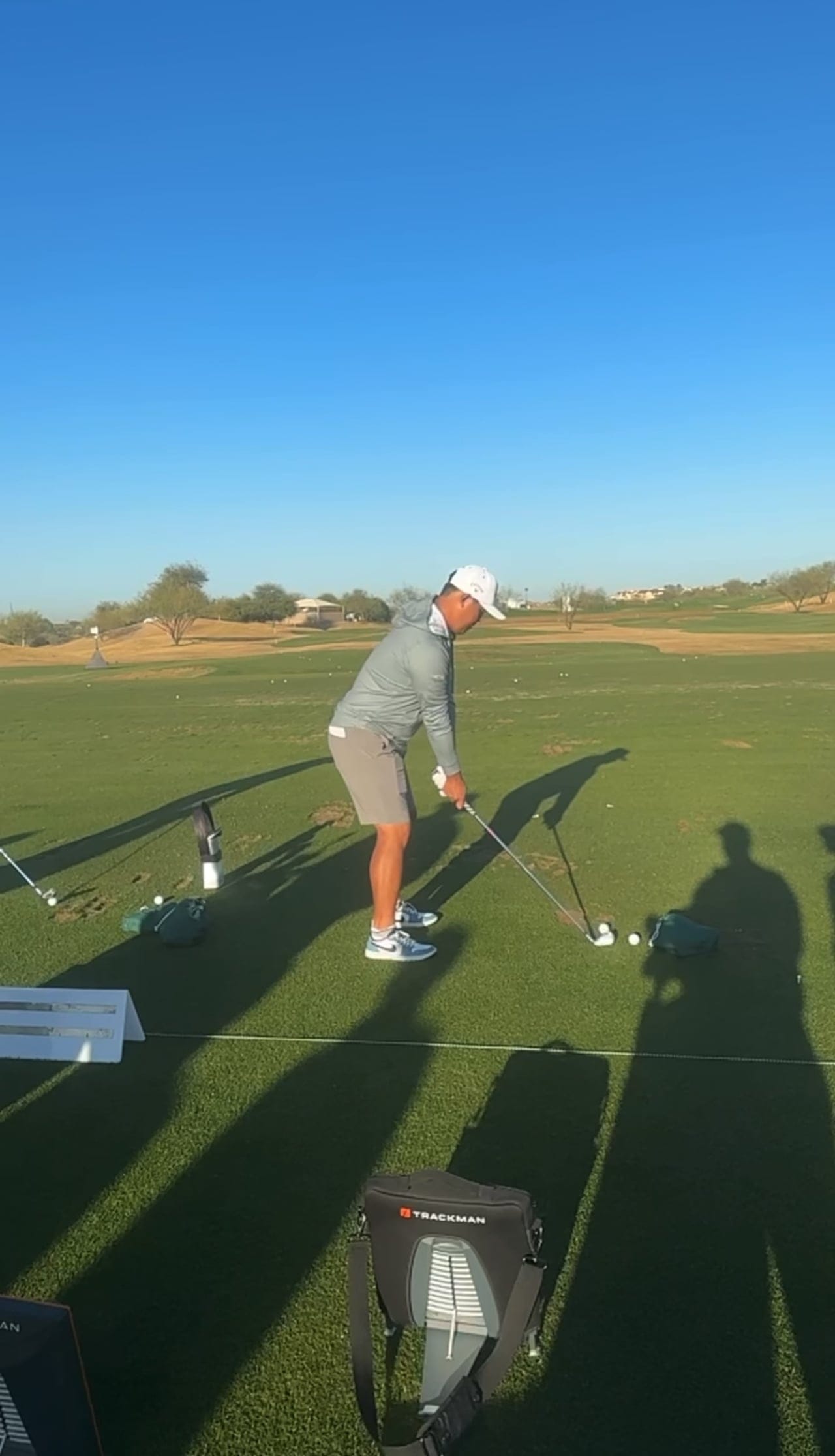
Knowing what shot to hit is one thing. The ability to execute it is another.
Years ago, Kim’s swing wasn’t capable of producing a controlled draw. Now he can call upon one when he needs it, including under pressure.
“He had a move that was pretty laid off and a very, very cutty ball flight,” says Chris Como, who has been working with Kim since 2022. “There was no draw in that swing. Now, it’s very neutral. His baseline shot is still probably a baby, baby fade, but it just falls a little right now. It just takes a little bit of a setup tweak, or a change of intention, and from there he can hit a soft draw.”
Spending time in Scheffler’s orbit has taught Si Woo another valuable lesson: the commitment it takes to be one of the best golfers in the world.
Early in his career, Si Woo would wake up around 11:00 a.m., grab lunch and practice for an hour. He didn’t think there was any issue with his routine.
Then he saw how Scottie works.
“I was really lazy. If I could go back, I would be more humble and try to work some more than before,” Si Woo says. “I never thought my practicing was an issue. And since I joined Royal Oaks, I’ve seen how much work Scottie puts in and how hard he works out even though he is number one in the world. I think he only thinks about trying to improve his golf game.
“It’s just crazy. Even with that talent, putting in that much work? It was impressive.”
Scheffler’s influence has rubbed off.
Si Woo has become more disciplined in practice and on the golf course. There is still a time and place for the hero shot, but he’s learned that firing at every flag isn’t a recipe for shooting the lowest scores.
The maturation is showing up in his results. This past season was unquestionably the best of his career.
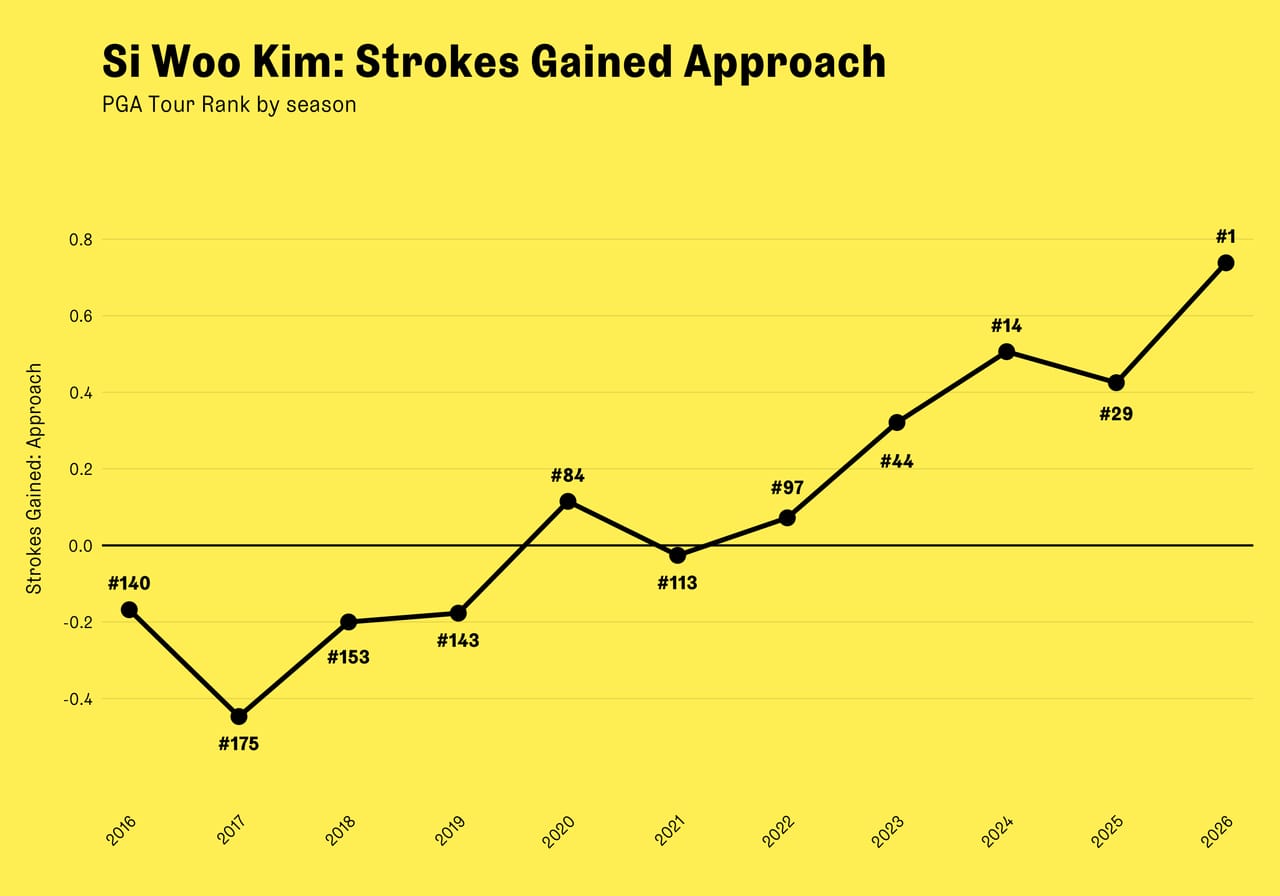
Si Woo ranked first in Strokes Gained: Approach on Tour in 2026. Prior to this year, he had never ranked better than 14th.
He posted 11 top-10 finishes and three runners-up on Tour this year, ranking second in each category only to his practice partner: Scottie Scheffler. Kim even held the solo lead during the middle stretch of his final round at the Open Championship, his first major in contention late on a Sunday. He made a few bogeys coming in before eventually slipping to T-6, still the best major championship finish of his career.
Golf isn’t the only area of Si Woo’s life that has settled into place.
For years, a mandatory two-year commitment to the South Korean military loomed over his career. Winning a gold medal in the 2023 Asian Games alongside Sungjae Im earned him a waiver, allowing him to focus solely on his professional golf career.
In 2022, he married Ji Hyun Oh, a retired seven-time winner on the Korean LPGA Tour.
“Ever since I married her, only good things have been happening in my career,” he has said.
They have a 2-year-old son, Theo.
“I really only think about golf and my kid. And when I’m home, I’m playing with him,” Si Woo says.
Thirteen years into his life in America, Si Woo is more comfortable and confident than he’s ever been.
At his first Presidents Cup, Si Woo was the only Korean on the International team. He struggled to communicate with his teammates. He was shy.
Two years ago, he and fellow Korean Tom Kim breathed life into the event in a foursomes match against Patrick Cantlay and Xander Schauffele, when Si Woo chipped in and raced around the green mimicking Steph Curry’s “Night, night” celebration.
Now, entering his fourth Presidents Cup, Si Woo is the top-ranked player on the International side and one of its leaders.
Come Sunday afternoon, Si Woo may very well get a chance to put his evolution on full display. Should the captains send out their No. 1 players first, Si Woo may find himself standing on the first tee with Scheffler — the guy he credits with his golfing education, and the guy he can never seem to beat at home.
I have to ask: Is that a match-up Si Woo wants?
“Half and half,” Si Woo says with a smile. “I want to try to beat him but I don’t want to lose on the 10th hole.”
The End Game
We’ve arrived at another point in the game where I am once again dead.
I’m spectating Si Woo, as I have for much of the night. We’ve reached the late stage of this particular round, which means I no longer get automatically dropped back into the action after a waiting period. For me to return, Kim must find a Buy Station and purchase a new life for me. Not with real dollars; the dollars you scavenge for.
I tell him it’s not a good idea, buying me back. I’ll die again anyway. It’s a bad investment.
I decide the moment is right to ask him the one question I’m still not sure I know the answer to: Does he truly believe he can win a major?
For the first time in his career, he does.
“I never thought about winning a major, but I kind of see a little bit of hope this year after the British Open,” he says.
That belief has changed the way he prepares for them.
Starting this year, Si Woo began arriving at majors to practice on Mondays, even if he had competed in a tournament the day before. Before this season, he wouldn’t start practicing at majors until Tuesday.
He isn’t just happy to be at majors anymore. Now he wants to contend in them.
“I’ve been playing decent golf and thinking maybe I can do it. It’s still hard, but I think I changed my goals this year.”
Against my advice, Si Woo buys me back into the game. Before long, we discover we are one of just two teams remaining. It’s either us or them.
Gunfire breaks out, a few expletives are shouted in perfect English, and we’re both lying on the ground dead. Text appears on the screen informing us we’ve finished in second place.
Sometimes, the other team just makes more putts.
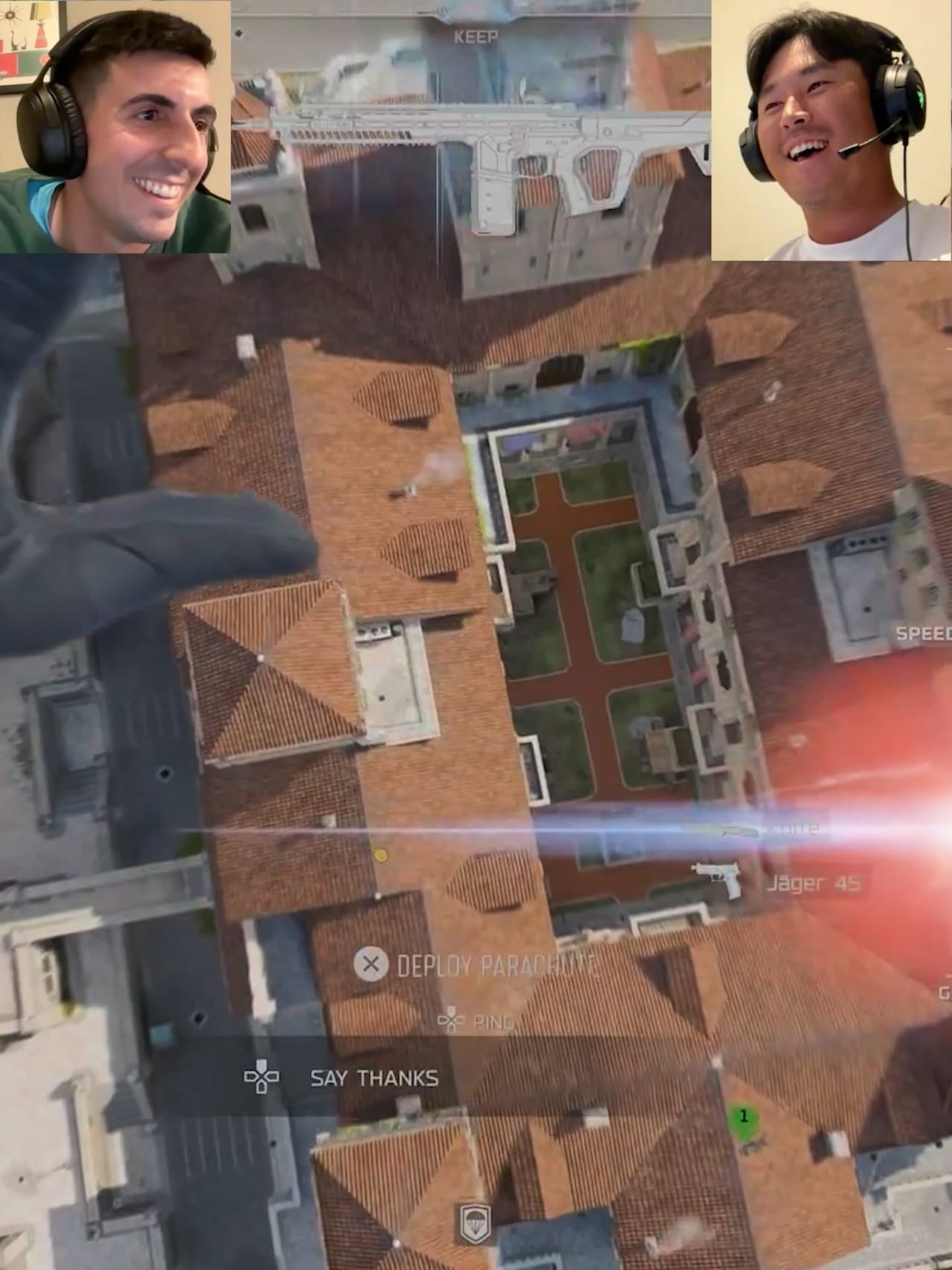
It’s time to log off. I’ve taken up enough of Si Woo’s time. He has a Presidents Cup to prepare for.
I thank my partner for the opportunity to join him in battle and remove my headset.
Si Woo tells me he intends to keep playing late into the night. His opponents have no idea that they are taking aim at one of the greatest golfers in the world — and a man who finally believes it.